.png)
My Cart
0
HOPS: NATURE’S SIGNATURE IN BREWING
Understanding Hops
Hops, known in Vietnamese as hoa bia, are a temperate-climate plant scientifically referred to by their Latin name, Humulus lupulus. Historical accounts from the Roman era describe this plant growing wild among willow groves, likening its presence to that of a wolf among sheep; a poetic origin of its distinctive name.
Over time, hops were domesticated by farmers and trained to grow along tall supports, allowing the plant to reach greater sunlight exposure and optimal development.
Hop flowers contain essential oils and natural acids, the compounds responsible for the bitterness, aroma, and stability of beer. Once harvested, hops are carefully dried to prevent mold growth. This drying process also helps to preserve and intensify their aromatic properties, while improving shelf life for storage and transport.
Where Hops Are Grown
Due to their need for temperate climates, hops can only be cultivated in select regions of the world.
Today, hops are grown primarily in Europe and the Americas. In Europe, major hop-growing regions include Hallertau in Bavaria (Germany); Bohemia in the Czech Republic; Poland; and parts of England such as Kent, Herefordshire, Worcestershire, Sussex, Suffolk, and Surrey, as well as Slovenia and Albania. In the United States, Washington State remains one of the largest hop-producing areas globally.
Hops are also cultivated in select parts of Asia, including China and North Korea, while Australia has emerged as another significant producer in recent decades.
The Importance of Hops in Brewing
Hops play a vital role in shaping the character of beer. They impart aroma and flavour, contribute the signature bitterness that balances malt sweetness, and enhance foam retention and overall product stability thanks to their natural antibacterial properties.
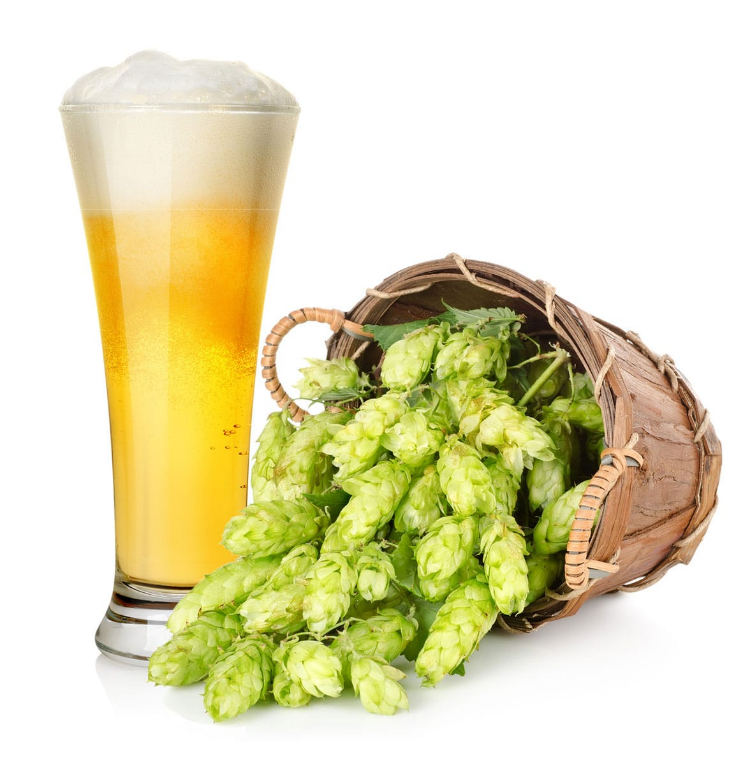
Hops giúp tạo độ đắng, hương vị cho bia
Beyond bitterness, hops also act as a natural preservative. This was especially significant in the development of the India Pale Ale (IPA) style — originally brewed with higher hop content to better withstand long sea voyages from England to British troops stationed in India.
Forms of Hops
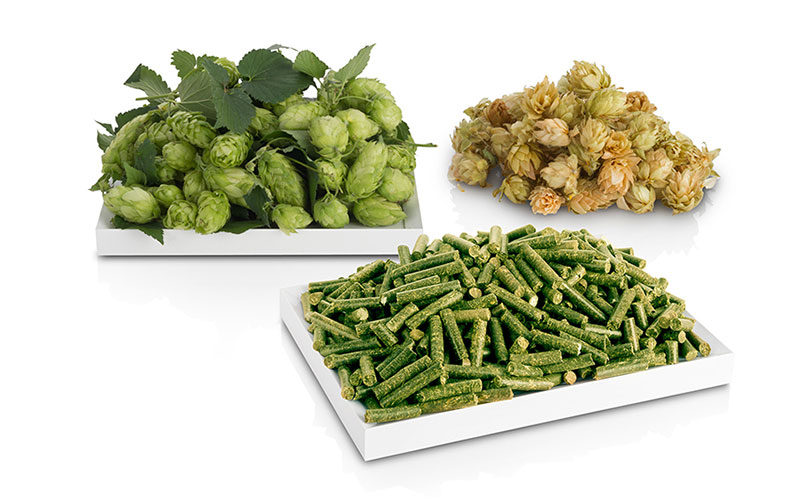
Hops are commonly available in three primary forms:
- Whole Leaf Hops – The dried, intact hop flower
- Pellet Hops – Compressed for improved storage and ease of transport
- Hop Extracts – Concentrated oils and resins
During brewing, hops are typically added to the kettle during wort boiling (the stage where water and malt are heated together). In some cases, hops may be introduced later in the boil to enhance aromatic qualities - a technique known as late hopping.
Another widely used method, particularly in craft brewing, is dry hopping. This process involves adding hops directly into the fermentation vessel rather than the boil kettle, allowing brewers to extract delicate aromatic oils that would otherwise evaporate at higher temperatures. In certain approaches, hops may also be added during whirlpooling, when the wort has cooled slightly but remains warm enough to facilitate infusion.
In rarer instances, beer may be brewed using freshly harvested, undried hop cones, commonly referred to as fresh hops.
Hop Varieties
There are dozens of hop varieties in cultivation today, many of which are native to specific regions. Each variety exhibits its own aromatic and bittering characteristics.
Hops are generally classified according to their alpha acid content: The higher the alpha acid level, the greater the bitterness potential.
Examples include:
- Highly Aromatic Hops: Saaz (Czech Republic), Bobek, Mittelfrüh
- Aroma Hops: Hallertau Tradition, Pacifica, NZ Cascade
- Flavour Hops: Polaris, Mandarina Bavaria
- Bittering Hops: Magnum, Herkules
In addition to bitterness, hops can introduce a range of flavour notes, including fruit, spice, floral, or herbal characteristics.
Certain heritage hop varieties, such as Saaz from the Czech Republic, Hallertauer Mittelfrüh, and Tettnanger, have been used by brewers in the Czech Republic, Germany, and Belgium for centuries. Notably, Saaz hops, known for their relatively low alpha acid content and delicate aroma, are widely used in traditional Pilsner-style lagers.
In recent years, hop varieties from New Zealand, Australia, and the United States have gained popularity, including:
- New Zealand: Pacifica, Wakatu, Cascade, Nelson Sauvin
- Australia: Galaxy, Vic Secret, Topaz, Helga, Ella
- United States: Cascade, Chinook, Crystal, Centennial, Citra, Simcoe, Columbus
Brewers are not limited to a single hop variety, combining different hops allows for the creation of unique and distinctive flavour profiles.
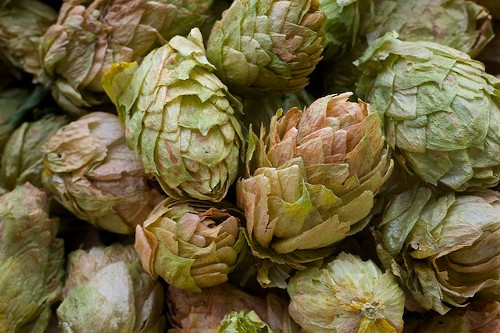
In Vietnam, hops are most commonly used in pellet or extract form. Any unused hops should be vacuum sealed and stored under refrigeration to preserve quality and aromatic integrity.